- Dubai, United Arab Emirates

There comes a time when every business needs to move past excel sheets and accounting apps and get acquainted with its new best friend—an ERP system. But which one do you go with?
There’s a long line of options to choose from, each more enticing than the last, but you’ve finally spruced your list down to two—Odoo and ERPNext. If you ask us, you can’t go wrong with either. They’re both excellent choices, but in our (entirely biased) opinion, you should go with ERPNext. Here’s why.
Odoo isn’t open-source and we’re not lying to you
We know, we know, it’s a big accusation, but it had to be said. If your list has whittled down to ERPNext and Odoo, you probably already know that they’re the two best open source ERP systems out there. That means that you can inspect, modify and distribute the code used to build them. And why should you care about this? Because it gives you all the control. You can examine the code, make sure it’s not doing anything you don’t want it to be doing, change the parts you don’t like, add any features you wish it had, you get the gist. Odoo positions its ERP system as open source, but really, it’s not. Only some of the core modules are available for the public to do with as they like, the rest of it is still shrouded in mystery. ERPNext, on the other hand, is and always will be 100% open source.
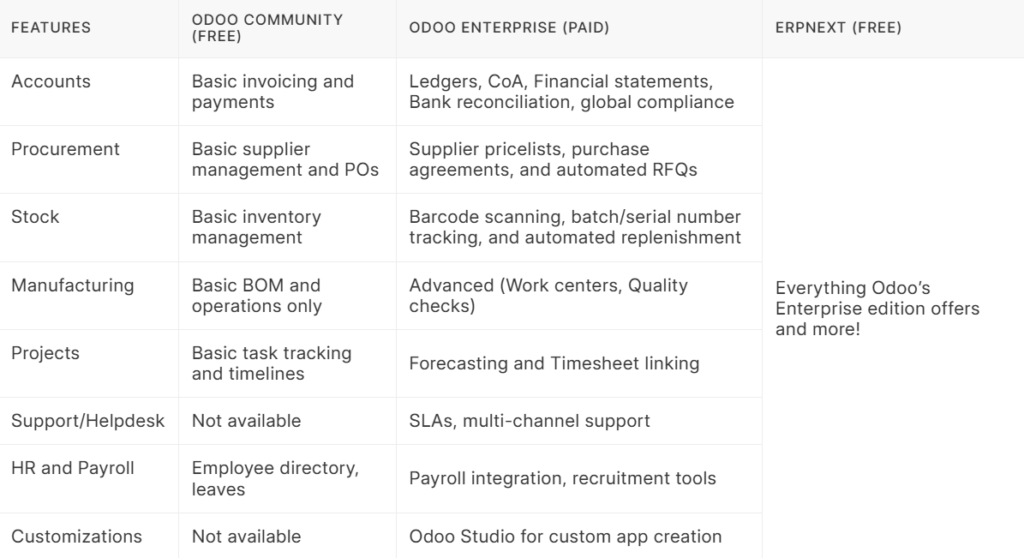
Odoo divides features between its Community (free) and Enterprise (paid) editions, with many advanced capabilities locked behind their hefty paid version.
You get to save a ton of money
Another great thing about being open source is that you can even use ERPNext for free if you want to. You only have to pay if you need hosting, and even then, it’s significantly cheaper than alternatives like Odoo which make you pay per user. Say your company has 50 users. That’s going to cost you less than $50 a month on ERPNext, whereas Odoo would charge you at least $450 per month.
You can try it out for as long as you like
Picking an ERP system is serious business. It’s a decision that shouldn’t be rushed. While Odoo does offer a community edition that you can use for free for as long as you like, it’s extremely limited. It doesn’t come with version upgrades nor does it let you use critical modules like accounting, payroll and so much more. But can you even call it an ERP system if it doesn’t even have accounting?
It’s simpler and easier to use
You get access to all its features right out of the box. Odoo’s modular structure sounds great on paper—you get to start with the modules you like, and add more as the need arises—but wouldn’t it be simpler to just use a unified platform that already has everything you need?
Even if you don’t know a lick of code. Create new forms, customize existing ones, build custom reports, set up workflows, change user permissions based on roles—ERPNext’s super intuitive UI lets you do all that and more without writing a single line of code. And if you do know how to code, you can create custom scripts in a jiffy right from the interface, or play around with the code on your favourite code editor to tailor it to your specific needs and truly make it your own. Odoo also lets you customize applications without coding through Odoo Studio, but it’s only available on its most expensive plan.
As your business grows, so will your team size. On applications that charge per user like Odoo, that also means your bills will start skyrocketing. But with ERPNext, you can add as many users as you want without getting charged more. You only pay for the resources you use, not for every extra addition to your team.
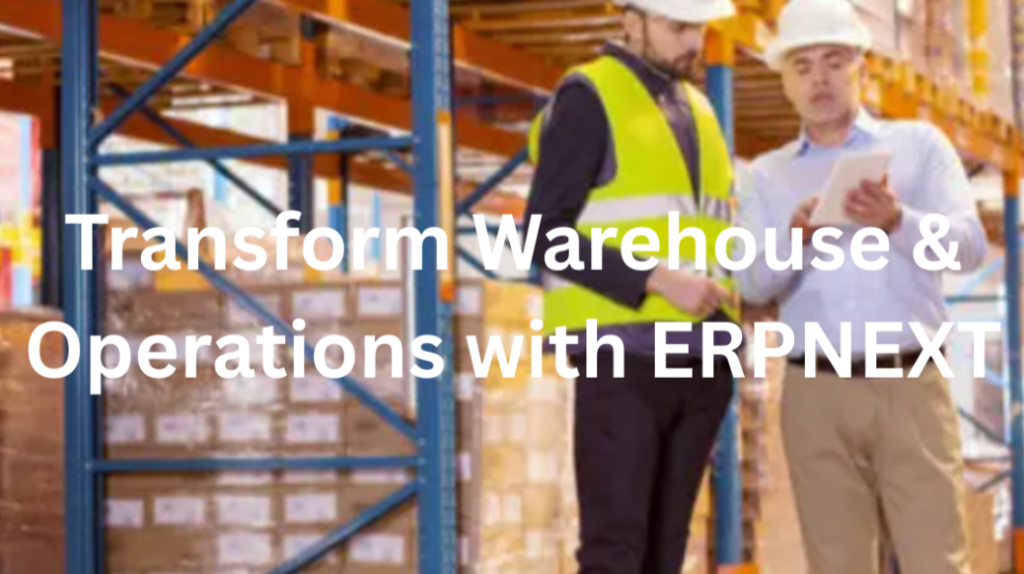
Efficient warehouse and operational management are crucial for businesses aiming to optimize supply chain performance and enhance customer satisfaction. Traditional warehouse management systems often lack the flexibility and integration needed to streamline processes effectively. ERPNEXT provides a comprehensive solution that enables businesses to modernize warehouse operations, improve inventory control, and boost overall efficiency.
Managing warehouse operations manually or using outdated systems leads to inefficiencies such as inventory discrepancies, order fulfillment delays, and high operational costs. A smart ERP solution like ERPNEXT helps businesses overcome these challenges by automating workflows, ensuring real-time visibility, and enhancing coordination across departments.
Odoo ERP offers a range of features designed to optimize warehouse and operational processes:
Adopting Odoo ERP for warehouse operations leads to significant business benefits:
ERPNEXT is a powerful tool for transforming warehouse and operational management. By leveraging automation, real-time tracking, and seamless integration, businesses can enhance efficiency, reduce costs, and achieve operational excellence. Investing in ERPNEXT ensures a competitive edge in today’s fast-paced market, making warehouse management a streamlined and data-driven process.
For businesses looking to optimize warehouse operations, implementing ERPNEXT is a strategic move toward long-term success.

You were probably using a Zoho app or two when you were starting out with your business. Now that your business is thriving and you need more help managing it, you might be considering upgrading to Zoho One. We’re here to tell you: stop. Take a minute to reconsider. There’s really no good reason to go with Zoho One when you could be using a full-fledged ERP system like ERPNext. Here’s why.
For one, you get so much more at only a fraction of the cost
Zoho One comes with over 45 apps to help you manage your business, but it still doesn’t have nearly as many features as ERPNext does, nor are they as deeply integrated. Take manufacturing and production management, for instance. Zoho One offers basic inventory management through Zoho Inventory, but it lacks the depth that ERPNext has.
ERPNext allows you to track raw materials and finished goods across multiple locations, create multi-level BOMs, plan production based on sales orders, demand forecasts and existing stock levels, track detailed production costs, manage subcontracts and so much more. Features like these are either not available or are significantly less comprehensive in Zoho One, which makes it less suitable to handle complex business processes, despite costing more.
When we say Zoho One costs more, we’re talking several times the cost
Zoho One has two pricing plans—an All Employee Pricing Plan, which mandates you to purchase licenses for all your employees at around $30 per employee per month, irrespective of whether they need to use it or not, and a Flexible User Pricing Plan, which lets you decide the number of licenses you need to buy, but charges close to $50 per user per month. So let’s say you have a company with 75 employees, out of which only 50 need to use a business management system. If you pick Zoho One’s All Employee Pricing Plan, it’ll cost you around $2220 a month, whereas the Flexible User Pricing Plan would set you back by close to $2400 a month. In contrast, ERPNext would charge you less than $50 in this scenario.
In addition to being potentially several orders of magnitude cheaper, ERPNext can even be used for free. ERPNext only charges for hosting, which means that if you host it on your own servers, you wouldn’t have to pay us a dime. Zoho One offers a 30 day free trial, but it has no free version.
ERPNext allows you to view, modify and distribute the code used to create it. This means you can inspect the code yourself, or pay someone else to, so you can know for sure that there’s no shady business going on under the hood. It also means you can modify the code to do whatever you please, add any features you want, use it for as long as you need without being charged. You could even host ERPNext on your own servers and control your security protocols, create backups and configure firewalls as per your requirements. It’s all in your hands. Zoho One, on the other hand, is closed source, which means that only people within the organization can see or have a say in how it works.
Create new forms, customize existing ones, build custom reports, set up workflows, change user permissions based on roles—you can do all that and more on ERPNext without writing a single line of code. And if you do know how to code, take advantage of its open source nature and play around with the code on your favourite editor, or create custom scripts right from the interface to tailor it to your exact needs. While SAP B1 is also customizable, it can take up a considerable amount of time and money, and usually requires external consultants or developers with SAP expertise.
ERPNext comes with pre-configured modules for specific industries, like manufacturing, retail, healthcare etc, while Zoho One is better fit to handle more general use-cases. Check out this page to see all the different ways ERPNext’s industry-specific functionalities can help you.
We get that every business is unique, which is why we’ve made customizing ERPNext a cakewalk. Create new forms, customize existing ones, set up custom workflows, change user permissions based on roles—all without writing a single line of code. And if you do want to code, we’ve made that easier for you as well. Create custom scripts right from ERPNext’s interface, or even modify the codebase on your favourite editor to fit your exact needs.
Find solutions to all your problems, even without paying for support

In today’s fast-paced retail environment, businesses in the UAE need robust, scalable, and efficient solutions to manage their operations seamlessly. That’s where ERPNEXT comes into play. This powerful suite of cloud-based applications helps businesses across the region streamline their operations, enhance customer experiences, and stay ahead of the competition whether a small business or a large enterprise, ERPNEXT offers customizable features that cater to your unique business needs.
As businesses in the UAE continue to grow, managing various functions from inventory, finance, sales, and customer service becomes a critical challenge. Traditional systems and manual processes no longer suffice to keep pace with the demands of modern retail. This is where ERPNEXT solutions in the UAE can make a huge difference.
Microsoft’s ERP systems are designed to integrate seamlessly with your business operations. With the support of a trusted partner , businesses can unlock the full potential of their operations.
In the UAE’s dynamic and competitive retail environment, companies need more than just a point-of-sale system. They need a comprehensive solution that connects all aspects of their business. ERPNEXT solutions in the UAE offer exactly that, integrating various departments like finance, inventory, and sales into one unified platform.
These solutions enable retailers to streamline processes, improve visibility, and make data-driven decisions. With the support of a ERPNEXT Dubai partner, businesses can ensure a smooth transition to an ERP system that is designed to meet the specific needs of the UAE market.
The UAE’s retail market is evolving rapidly, and businesses must adapt to survive and thrive. With ERPNEXT, you have a comprehensive, scalable, and secure solution to drive operational efficiency, improve customer experiences, and gain a competitive edge. By working with a partner your business can fully leverage the power of this advanced ERP platform to achieve long-term success.
We are committed to helping businesses in the UAE unlock the full potential of ERPNEXT solutions. Whether you are just starting with ERPNEXT or looking to upgrade your existing system, we offer the expertise and support you need to make a seamless transition. Let us help you streamline your operations and accelerate growth with ERPNEXT Dubai and beyond.
When you started your business, you were probably fine with using excel sheets and working out of your parents’ garage. But then you grew, and you needed more. So you rent an office and start using tools like QuickBooks. But your dreams don’t stop there. You grow even bigger and now it’s time for the next upgrade. You could choose QuickBooks Enterprise, but do you really want to keep switching tools every time your business hits a new milestone? Why not pick a solution that can manage your business at every stage like ERPNext? Still on the fence? Here are 8 reasons you should pick ERPNext over QuickBooks Enterprise.
QuickBooks is primarily an accounting tool and while its Enterprise version comes with features to manage inventory, payroll and job costing as well, it still only has a fraction of the features that ERPNext does. Take manufacturing, for instance. QuickBooks Enterprise claims to have features tailor made for the industry, but they’re not nearly as comprehensive as ERPNext’s. It lacks important features like production planning, work order management, material requirements planning, subcontracting and so on, which makes it less suitable to handle complex business processes.
Despite having only a fraction of the features that ERPNext does, QuickBooks Enterprise costs significantly more. Its premium plan, Diamond, charges over $1000 a month for a team of up to 40 users, even without hosting. On the other hand, you can use ERPNext without paying a dime if you don’t want hosting, and even if you do, it would cost you less than $50 a month for a team of the same size. To make matters worse, QuickBooks Enterprise won’t give you your money back if you decide not to use it after the first 60 days. So if you’ve committed to the annual plan but decide to cancel after 6 months, you wouldn’t get a prorated refund for the remaining 6 months, which is in sharp contrast to ERPNext’s pricing plan which only charges you for the resources you use.
ERPNext is 100% open source, which means you get all the control
ERPNext allows you to view, modify and distribute the code used to build it. This means you can inspect the code to make sure it’s not doing anything you don’t want it to. It also means you can modify the code to do what you please—you can add any features you want, host it wherever you like, use it for as long as you need without getting charged. All the control lies in your hands.
When we said you get all the control, we meant it. Even if ERPNext’s parent company decides to abandon the product or stop operating in your country (like QuickBooks did in India), you can still keep using it for as long as you like. After all, you have full access to the code. Plus, ERPNext has an active community which could continue to contribute to it even if the parent company ever stops, and if you need any specific features, you could always just build it yourself or pay someone else to.
No hiding features behind paywalls
ERPNext lets you use all of its features right out of the box, but QuickBooks Enterprise requires you to pay extra for add-ons and advanced features. For instance, if you need access to a CRM, QuickBooks offers a Salesforce CRM connector, but it would cost you an extra $150/month, plus a one-time onboarding fee. There’s also a lack of transparency in their pricing—QuickBooks Enterprise charges you extra for hosting, but you can’t even see how much if you have more than 10 users. You would have to call them to find out.
Work with anyone across the globe
If you’re an international business or a business looking to expand globally, ERPNext is better fit to suit your needs. It supports over 40 languages and can handle transactions in different currencies with ease. It also provides country-specific localizations like VAT in Europe and GST in India. QuickBooks Enterprise can handle operations in the US and Canadian markets well, but does not support some of the unique needs of businesses in other parts of the world.
Customize it to fit your exact needs
Every business has different needs, so why not use software that can be moulded to fit them exactly? ERPNext lets you create new forms, customize existing ones, set up custom workflows, change user permissions based on roles—all without writing a single line of code. More complex operations might require some coding, but we’ve made that easier as well. ERPNext lets you create custom scripts right from its interface, and because it’s open source, you can even modify the codebase on your own.
Scale your business with ease
If you have any plans to grow your business, you might want to think twice before committing to QuickBooks Enterprise. For one, it only allows you to add a maximum of forty users, even on its highest plan. And if that’s not bad enough, it also charges per user, which means that if your team size grows, so will your bill.
The secret to a great business is to have loyal customers. And to make your customers loyal, you need to understand them. Remember their likes and dislikes. What they bought and what they could have. Which is why you need a CRM. And there’s no better CRM than Salesforce. But what if we tell you you don’t have to settle for just a CRM? Why not go for an ERP system that also has a CRM? Two birds, one stone? That’s why ERPNext is the right choice for you.
With ERPNext, you get a lot more for a lot less
There’s no denying that Salesforce is a great CRM, but even Salesforce recommends integrating your CRM with an ERP. So why not save yourself the trouble of finding, buying and integrating both, and get yourself a product that’s two-in-one? ERPNext lets you manage all operations in one platform by integrating CRM with other key business processes like accounting, inventory, project management and procurement. Even if you were to get a separate product to handle non-CRM functions, it would just increase costs and complexity, and the chances of it being as deeply integrated with your CRM are low.
When we say it costs a lot less, we mean it
Salesforce offers its CRM features through a suite of different products, each with its own different pricing tiers. The cheapest subscription plan, which is made for small businesses and offers only the most basic features, costs $25 per user per month. Additionally, there are add-ons that carry extra subscription costs, as well as support and service packages that charge extra. In contrast, ERPNext charges only for hosting, starting at a mere $5 a month, and doesn’t hide any features behind paywalls.
ERPNext is as customisable as Salesforce, and more!
If you’ve used Salesforce, the one thing you might have appreciated is the level of customisability it provides. ERPNext built on Frappe Framework is as customisable as Salesforce, if not more. Which means you can have your own workflow built exactly how you like it, build or buy custom app specific to your industry and a lot more. This is exactly the reason why a Fortune 500 company decided to choose ERPNext CRM over Salesforce last year.
It doesn’t take a village to operate
ERPNext’s interface is clean, intuitive and simple to use, even for users without any technical expertise. Businesses can start using it quickly, without extensive training or dedicated administrators, which is in sharp contrast to Salesforce, which has a steep learning curve and often requires a dedicated team of admins and operation folks to manage it properly.
You can even use it for free
In addition to being significantly cheaper, ERPNext can even be used for free for as long as you like. ERPNext only charges for hosting, which means that if you can host it on your own servers, you wouldn’t have to pay us a dime. Salesforce’s cheapest plan comes with a 14 day free trial, and every other plan offers a 30 day free trial, but it has no free version and 30 days isn’t always enough time to figure out if it’s the right fit for you.
ERPNext is 100% open source, which means you get all the control
ERPNext allows you to view, modify and distribute the code used to create it. This means you can inspect the code yourself to see what’s going on under the hood, modify the code to do whatever you please, add any features you want, host it wherever you like. You get full control over your software and data. Salesforce, on the other hand, is closed source, which means that only people within the organization can see the codebase or have any say in how the product works.
Host it wherever you like, however you like
Salesforce is entirely cloud-based, which might not be ideal for companies that need to comply with specific data privacy regulations, or those that have limited access to cloud infrastructure. ERPNext offers more deployment options—you can host it on Frappe Cloud, on third-party servers of your choice, or even on-premise, which means you can control your security protocols, create backups and configure firewalls however you need.
Get all the help you need, free of cost
On ERPNext, if you spend more than $50 a month on hosting, you’ll get support for free, but even if you don’t, that’s fine. The ERPNext community is over 20,000 members strong and extremely active. Any question you might have has probably already been answered on our discuss forum, and if not, all you have to do is ask. Salesforce offers basic support for free with all its plans, but it’s not the best, with customers reporting slow response times. Premium support comes with faster, more comprehensive service, but it comes at an additional cost.
Don’t get stuck paying per user
Scaling is a good thing. Just because your team grew doesn’t mean your bills should too. On ERPNext, you can add as many users as you want without getting charged more. Pay only for the resources you use, not for every extra addition to your team.
If you’re in the market for a cloud-based ERP system, you’ve probably already heard of Oracle NetSuite. It tops most lists for cloud ERPs, but in our humble opinion, ERPNext is just as deserving of your attention. Read on to find out why.
Know what you’re getting yourself into
NetSuite does a lot of things right, but transparency is not one of them. Their website somehow manages to say a lot without giving away any of the information you actually need to make an informed decision about which ERP system you should choose. Like what modules does the base version come with? What do you need to pay extra for? What editions do they have? Do they charge per user? Why does their website not even have a pricing page? There’s far too much that’s cloaked in mystery to make such an important decision for your business. In contrast, ERPNext tells you exactly what you’re signing up for, right from the get-go.
100% honest, 100% open source
When we say we’re committed to transparency, we mean it. ERPNext is 100% open source, which means that our website isn’t the only thing we’re transparent about, it’s also our codebase. Anyone can view, modify and distribute the code used to build ERPNext, which means you can inspect the code to see exactly what it’s doing, change the parts you don’t like, add any features you want, host it wherever you like, you get the gist. You get full control, all the time.
It only costs a fraction as much
We assume. We don’t know for sure because, like we said, NetSuite won’t tell you how much it costs without getting in touch with them, but we’re guessing it costs a pretty penny. What we do know is that their pricing is anything but straightforward—it depends on company size, number of user licenses, type of user licenses, add-on modules, customizations required, ongoing training and support, your mother’s sun sign etc. Subscription costs also usually increase significantly at the time of renewal, with some users reporting even 100% hikes after the initial contract period. On the other hand, ERPNext charges only for hosting, which starts at as little as $5.
Host it wherever you like, however you like
NetSuite is fully hosted and maintained by Oracle, which is fine if you don’t want to deal with the hassle of self-hosting, but if you require more control over your data and infrastructure, you should go with ERPNext. It offers more deployment options—you can host it on Frappe Cloud, on third-party servers, or even on your own servers, which means you can control your security protocols, create backups and configure firewalls as per your requirements.
You can even use it for free
If you’d like to take your time and vet your options thoroughly before you decide what to go with, NetSuite’s 14 day free trial might not be enough for you. ERPNext only charges for hosting—which means that if you host it on your own servers, you wouldn’t have to pay us a dime. You can take all the time you need and use it for free for as long as you like.
Process payroll without paying extra
While we’re on the topic, you don’t have to pay extra for any module on ERPNext. You get all the features you need, right out of the box. Unlike ERPNext, NetSuite doesn’t come with a fully integrated payroll module. You could pay extra and get SuitePeople, but it’s built for users in the United States. If you’re not from the US, you’ll need to rely on third-party integrations to handle payroll management.
Get a POS system that works, even offline
Don’t let your flakey internet prevent you from making a sale. ERPNext allows you to use its POS system even without internet access. It’ll sync once you’re back online. NetSuite doesn’t even come with a POS system out of the box. You’ll have to use third-party integrations, or shell out extra for SuiteCommerce, but it won’t support offline transactions.

If you’ve heard of ERPs, chances are you’ve heard of SAP. They created the very first ERP system ever back in 1979 and they’ve been dominating the market ever since. But maybe it’s time for this Goliath to meet its David.
ERPNext might be relatively new to the game, but here’s 8 reasons why you should pick it over SAP B1.
It doesn’t cost a small fortune
Or a large one. SAP’s ERP offerings are priced significantly higher than most of its competitors’, with B1’s licensing costs ranging from $3000 to $5000 per user for a one-time perpetual license, or between $100 and $300 per user per month if you go for a subscription.
Implementation costs are also usually quite steep, and unless you opt for the cloud version, you’ll also have to pay an annual maintenance fee which typically costs 15-22% of the license fee for ongoing support, updates and software maintenance.
In contrast, ERPNext charges only for hosting, which starts at a mere $5 a month.
You can even try it for free for as long as you like
Picking the right ERP system is one of the most crucial decisions you can make for your business, one that should not be rushed. While SAP B1 lets you test it out before you commit to it, the free trial only lasts a month, which might not be enough time to vet it properly. On the other hand, ERPNext can be used for free for as long as you like if you can self-host it.
Get full control over your software
ERPNext is 100% open source, which means anyone can view, modify or distribute the code used to build it. This means you can examine the code to make sure it isn’t doing anything it shouldn’t be, change the parts you don’t like, add any features you think it needs, host it wherever you want, you get the gist. All the control lies in your hands.
It’s a breeze to use
ERPNext offers a clean, modern interface that’s intuitive and easy to pick up, even on your first try. SAP B1 has a more complex interface, which might prove challenging to those unfamiliar with ERP systems. Users often require training to get a hang of the system, which is usually quite expensive.
It’s also a breeze to customize
Create new forms, customize existing ones, build custom reports, set up workflows, change user permissions based on roles—you can do all that and more on ERPNext without writing a single line of code. And if you do know how to code, take advantage of its open source nature and play around with the code on your favourite editor, or create custom scripts right from the interface to tailor it to your exact needs. While SAP B1 is also customizable, it can take up a considerable amount of time and money, and usually requires external consultants or developers with SAP expertise.
Get it up and running in a matter of weeks
ERPNext implementations don’t take nearly as long, or cost nearly as much, especially for SMBs. Deployment timelines range from a handful of weeks to a few months, whereas a more complex system like SAP B1 could require several months and end up costing significantly more.
Get all the help you need, free of cost
Like we said before, ERPNext only charges for hosting, and if you’re paying more than $50 a month for hosting, we’ll throw in support for free. And if you’re not, that’s okay too. ERPNext comes with a super active and passionate community that’s probably already answered any query you might have had on our discuss forum, and if not, all you have to do to find a solution is ask.
On ERPNext, scaling is a good thing
Don’t you think it’s really unfair that businesses like SAP make you pay extra every time someone new joins your team, even if your actual usage doesn’t go up? Because we do. Which is why on ERPNext, you only pay for the resources you use, not for every extra addition to your team. Let your team grow without worrying about your bills growing too.
Honestly, we could go on forever, but we’ll let the rest of the world do the talking for us. Check out this video to see why Sailesh Khawani recommends picking ERPNext over SAP B1, or this one to see how Jay cut down his average transaction time from 5 minutes to 30 seconds by switching from SAP B1 to ERPNext.
This experience reflects a common challenge across the Kingdom—international ERP solutions often fail to address Saudi Arabia’s unique regulatory environment and business practices. This article explores how ERPNEXT vertical-specific ERP solutions are being adapted to meet the distinct needs of Saudi industries.
The Saudi market presents specific challenges that generic ERP implementations struggle to address:
“Saudi businesses operate under Vision 2030 initiatives, ZATCA e-invoicing requirements, and Saudization regulations that most international ERP systems weren’t designed to handle,” notes an ERP consultant based in Riyadh. “Vertical solutions tailored to both industry and regional requirements are becoming essential.”
The Kingdom’s rapid digital transformation under Vision 2030 has accelerated demand for sophisticated ERP solutions that balance international best practices with local requirements.
At Eastern Province Petrochemicals, the Production Manager remembers their struggle with a generic ERP: “We had to develop complex customizations to integrate with SIDF reporting requirements and manage Saudization quotas across different technical roles.”
Their manufacturing-specific ERPNEXT implementation now includes:
“The Saudi-specific manufacturing features made regulatory compliance much simpler,” the Production Manager notes. “We’ve reduced our compliance reporting time by 60% and improved our Saudization metrics across technical roles.”
The Operations Director at Jeddah Medical Group highlights their journey: “Saudi healthcare providers face unique challenges—we need to comply with Saudi FDA regulations, integrate with CCHI insurance systems, and meet Ministry of Health reporting requirements.”
Their healthcare-specific ERPNEXT deployment features:
“The system understands Saudi healthcare protocols,” explains the Operations Director. “It incorporates Hijri calendar functionality alongside Gregorian dates and manages the unique relationship between public and private healthcare financing in the Kingdom.”
Malls, a growing chain of retail centers across the Kingdom, their retail-specific ERPNEXT implementation addressed unique Saudi market dynamics:
“Saudi consumer behavior differs significantly from Western markets,” explains the Marketing Director. “Shopping tends to be more family-oriented, peak times align with prayer schedules, and seasonal variations around Ramadan and Hajj require special inventory planning.”
Their retail vertical solution delivers:
“Having retail systems that understand Saudi shopping patterns has been transformative,” the Marketing Director notes. “Our customer satisfaction scores have increased by 32% since implementation.”
The oil and gas sector remains central to Saudi Arabia’s economy despite diversification efforts. Vertical solutions for this industry must address highly specialized needs.
The Operations Technology Manager at a major Saudi energy company describes their implementation: “Our ERPNEXT vertical solution provides specialized functionality for upstream, midstream, and downstream operations while integrating with Saudi Aramco’s vendor systems and HSSE requirements.”
Key features include:
“The Saudi-specific features streamlined our operations with major partners and regulatory bodies,” the Operations Technology Manager explains. “What previously required multiple systems now works seamlessly within one platform.”
The construction sector is booming under Vision 2030, with megaprojects creating unprecedented demand for specialized ERP solutions.
“Construction companies in Saudi Arabia face unique challenges with project classification requirements, contractor categorization, and municipal permitting processes,” explains the Project Director at a leading Saudi construction firm.
Their construction-specific ERPNEXT implementation features:
“Having systems that understand Saudi construction regulations and cultural factors has reduced our administrative overhead by approximately 40%,” says the Project Director.
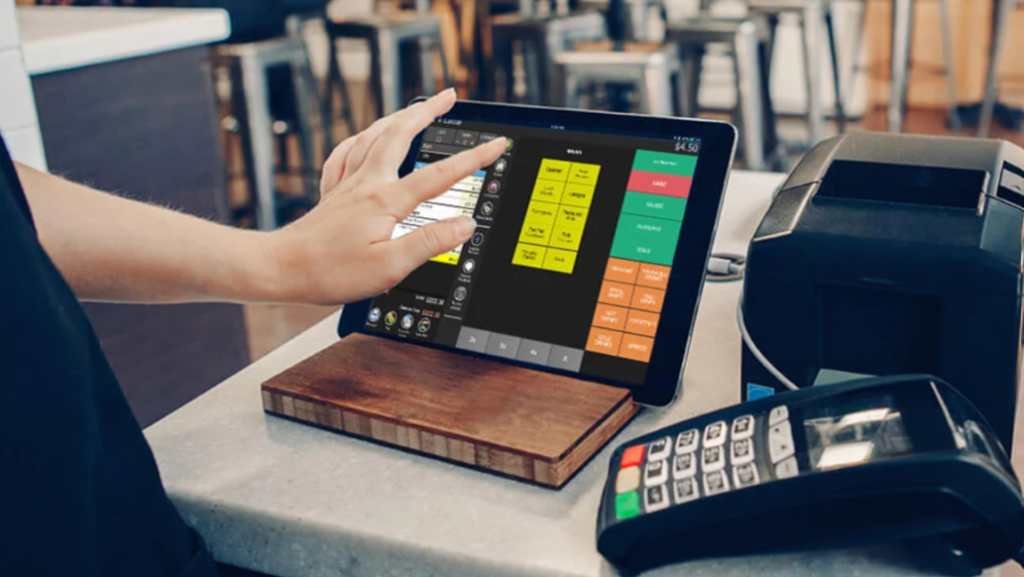
Invest in the future of your retail business with the right POS and ERP solution, Learn which factors you need to consider to select a POS and ERP solution that will support and propel your business for years. For more info contact 0524298745.
Our high-quality, cost-effective and highly configurable software solutions help retailers, hospitality and forecourt businesses worldwide. LS Centralized POS and retail management software to control your entire business, front to back
Work more effectively, waste less time and fewer ingredients, and maintain a clear overview of your restaurant’s performance, and what you need to succeed, at all times.
Enhance your staff’s performance, offer exceptional customer service and increase sales and loyalty.
No more integration struggles, no more unaligned and unclear data, uncontrolled costs, and issues dealing with too many pieces of software.
In today’s fast-paced digital economy, businesses need more than spreadsheets and disconnected software tools to manage operations efficiently. Enter ERPNext — a powerful, open-source Enterprise Resource Planning (ERP) system that is rapidly becoming the go-to solution for small and medium-sized businesses (SMBs), as well as growing enterprises across the globe.
So, why should you choose ERPNext for your business? Here’s a deep dive into what makes ERPNext a standout ERP platform.
One of ERPNext’s most compelling advantages is that it’s open-source. Unlike proprietary ERP solutions that require expensive licenses and long-term contracts, ERPNext gives you full control at a fraction of the cost. You can self-host it for free or opt for affordable cloud-hosted plans.
Being open-source also means:
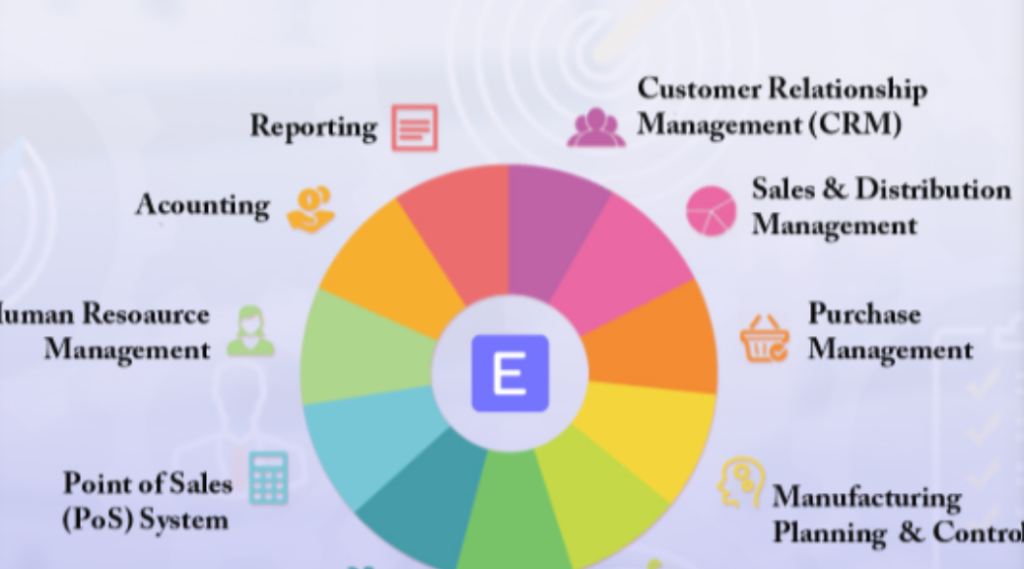
ERPNext doesn’t just handle one aspect of your business — it covers everything. From accounting and inventory to HR, CRM, manufacturing, and project management, all modules are seamlessly integrated. This holistic approach allows departments to collaborate better and share data in real time.
Key modules include:
ERP systems often have a reputation for being clunky and complex, but ERPNext bucks the trend. Its clean, intuitive interface is designed with the end-user in mind. Even non-technical users can navigate the system with ease, reducing training time and increasing user adoption.
Every business is unique, and ERPNext embraces this. It allows you to:
This flexibility ensures that ERPNext can adapt to your business processes rather than forcing you to adapt to the software.
ERPNext has a thriving global community that actively contributes to its growth. Whether you’re looking for tutorials, third-party apps, or support from experienced developers, the ecosystem is rich and growing. The Frappe team, which maintains ERPNext, also provides excellent documentation and regular updates.
ERPNext grows with your business. Whether you’re a 5-person startup or a 500-employee manufacturer, the system can scale to meet your needs. Cloud hosting options, role-based access controls, and performance optimization features make it suitable for organizations of all sizes.
ERPNext provides powerful reporting and analytics tools out-of-the-box. With real-time dashboards, customizable reports, and data visualization capabilities, you can make informed decisions that drive growth and efficiency.
Security is a top priority in ERPNext. Features like role-based permissions, audit trails, and backups help keep your data safe. Additionally, ERPNext can be configured to comply with various local tax laws and regulatory requirements such as GST, VAT, and more.
Choosing the right ERP is a strategic decision that impacts every aspect of your business. ERPNext stands out for its flexibility, affordability, and rich feature set — all backed by an active global community. Whether you’re in retail, manufacturing, services, or education, ERPNext is a future-ready platform that can empower your business to operate smarter and scale faster.
Ready to take control of your business with ERPNext? Explore the platform, test the demo, and see how it can revolutionize the way you work. kindly get in touch with us.